



Brain & Spine Surgery By Experts
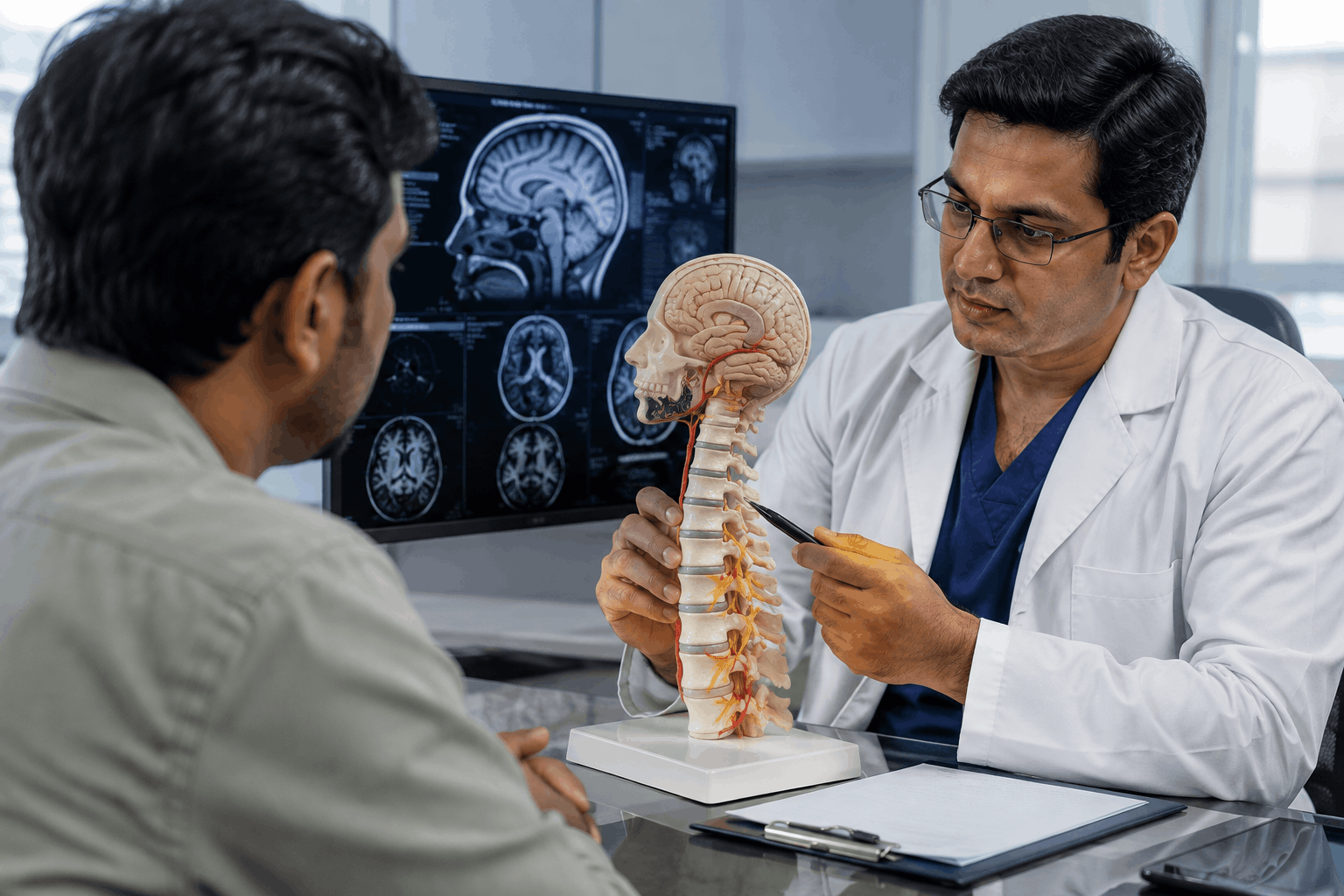
The Neurosurgery Department specializes in the surgical treatment of disorders affecting the brain, spine, and nervous system. Our team performs advanced neurosurgical procedures for traumatic injuries, brain tumours, spinal disorders, and neurological emergencies with a focus on precision, safety, and recovery.
Neurosurgery Services

Aneurysms
Brain Tumor Surgery
Degenerative Diseases of Spine/ Disc Problems
Epilepsy Surgery
Head Injuries
Hydrocephalus
Ischemia of Brain
Infectious Diseases of Brain
Infections of Spine
Multiple Sclerosis
Minimally Invasive Spine Surgery
Nerve Conduction Study
Neuropathy and Muscle Disorders
Pediatric Neurosurgery
Pain Syndromes (Chronic Pain/ Intractable Pain)
Skull Base Surgery
Stroke/ Brain Attack
Spinal Tumors
Spine Injuries
Vascular Tumors
Neurosurgical Care Services
Specialized Surgical Care for Brain Disorders
Our neurosurgeons evaluate and perform procedures for brain tumours, brain haemorrhage, traumatic brain injuries, and other neurological conditions requiring surgical intervention.
Our Services Include
- Brain Tumour Surgery
- Brain Haemorrhage Care
- Stroke Surgery
- Neuro Trauma Surgery
Advanced Solutions for Spine Disorders
We provide surgical management for spinal injuries, slipped discs, spinal tumours, and degenerative spine conditions with the goal of relieving pain and restoring mobility.
Our Services Include
- Cervical Spine Surgery
- Lumbar Spine Surgery
- Spinal Tumour Surgery
- Spine Trauma Care
Timely Surgical Intervention for Critical Cases
Emergency neurosurgical care plays a vital role in managing severe head injuries, brain swelling, and other life-threatening neurological conditions requiring immediate attention.
Our Services Include
- Head Injury Management
- Emergency Neurosurgery
- Hydrocephalus Surgery
- Post-Surgical Monitoring
Frequently Asked Questions
Q1. Which conditions may require neurosurgery?
Q2. How is Neurosurgery different from Neurology?
Q3. What are the common symptoms of spinal disorders?
Q4. What should patients expect after neurosurgery?