

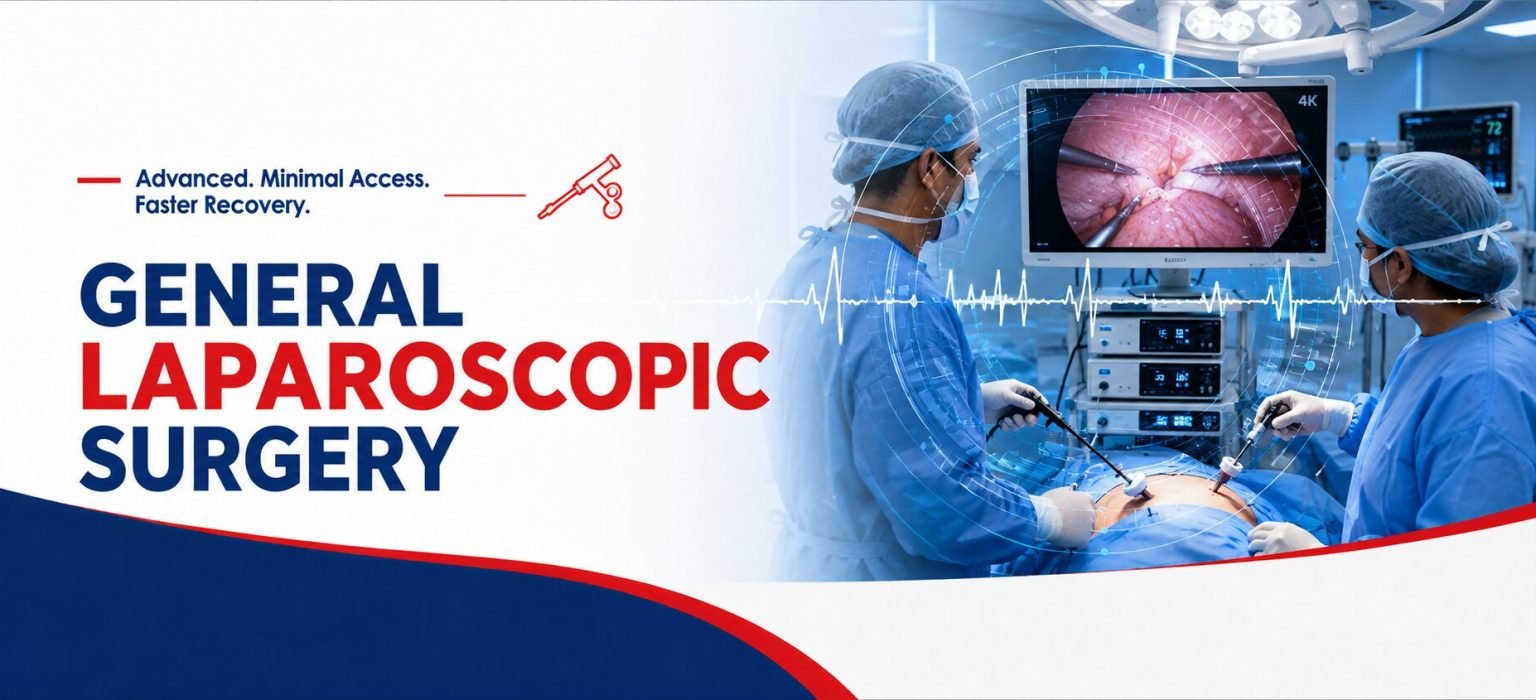



Modern Surgical Care for Everyday Conditions
The General & Laparoscopic Surgery Department offers surgical treatment for a wide range of common and complex conditions. Using minimally invasive laparoscopic techniques whenever appropriate, our surgeons focus on reducing post-operative discomfort, supporting faster recovery, and helping patients return to their daily routine safely.

General & Laparoscopic Surgery Services

Amputations
All types of Fistulas
All Soft Tissue Swellings
All Types of Hernias
Appendectomy and Hernia Repair
Cholecystectomy
Endocrine and Colorectal Surgery
Gastrointestinal Surgery
Hepatobiliary and Pancreatic Disease
Outpatient and Inpatient Services
Open and Minimal Invasive Surgery
Pancreatic Pseudo-Cyst Drainage
Piles / Fissures
Splenectomy and Colectomy
Salivary Gland
Scrotal Swellings
Trauma – Management
Varicose Veins Surgery
Surgical Care Services
Safe Surgical Care for Common Conditions
Our surgeons manage a wide range of conditions requiring planned or emergency surgery. Every patient receives a thorough evaluation and a treatment plan based on their individual medical needs.
Our Services Include
- Hernia Repair
- Appendix Surgery
- Breast Lump Surgery
- Emergency Surgical Care
Minimally Invasive Surgical Procedures
Whenever suitable, laparoscopic surgery is performed through small incisions, helping reduce pain, shorten hospital stay, and support a quicker recovery compared to conventional surgery.
Our Services Include
- Gallbladder Surgery
- Laparoscopic Hernia Repair
- Appendix Removal
- Diagnostic Laparoscopy
Care Before, During & After Surgery
Our team provides comprehensive surgical care, including pre-operative assessment, safe surgical procedures, post-operative monitoring, and follow-up to promote a smooth recovery.
Our Services Include
- Pre-Surgical Evaluation
- Post-Operative Care
- Wound Management
- Follow-up Consultation
Frequently Asked Questions
Q1. What conditions are commonly treated with laparoscopic surgery?
Q2. What are the advantages of laparoscopic surgery?
Q3. Is every patient eligible for laparoscopic surgery?
Q4. How should I prepare before undergoing surgery?